
The awards section is dedicated to highlighting the recognition that Ecuador has received internationally for its excellence in tourism. These awards are a reflection of the country’s commitment to quality, sustainability and innovation in the tourism industry, positioning Ecuador as a world-class destination.
Ecuador & Galapagos Guide: Key Tips for a Smooth Journey
Before you start planning your journey, we have put together a few essential guides to help you prepare for your trip to Ecuador. Yo will find practical advice on entry requirements, safety recommendations, packing suggestions, and local customs. Reviewing these tips will make it easier to organize your itinerary and ensure a smooth, well-planned experience in Ecuador and the Galápagos.
Currency
The Ecuadorian currency is the American dollar. At tourist sites, purchases can be made with credit cards such as American Express, Visa, Master Card and Diners Club.
Electricity
110V and 60Hz plugs. In hotels and on cruise ships, 220V is available.
Time Difference
In Ecuador, it is 7 hours earlier in summer and 6 hours earlier in winter in relation to central European countries. The Galapagos Islands are one hour earlier than the Ecuadorian mainland.
Airports
Ecuador has two international airports: Mariscal Sucre Airport in Quito (located in Tababela), and José Joaquín de Olmedo Airport in Guayaquil. Both offer flights to major cities worldwide. The fastest transportation is by air, especially between Quito, Guayaquil and Cuenca with daily flights. The average time of a flight is 30 to 45 minutes, except for flights to Galapagos that take approximately two and a half hours from Quito and hour and a half from Guayaquil.
Food
Ecuadorian dishes use ingredients and condiments that can be quite different from those in your home country, so enjoy them with caution. Start with small portions and see how your body reacts to new foods. Many cases of food upset happen when we don’t give ourselves time to adjust.
ATMs
Are easy to find in Ecuador, even on the Galápagos Islands and they dispense U.S. dollars. You may need to pay a service fee for using them. It’s handy to carry small denominations, having one- and five dollar bills is useful, as long as they’re not torn or wrinkled.
Language
Ecuador’s official language is Spanish, but Kichwa an Indigenous language of Incan origin is spoken by many Indigenous communities. In total, several native languages are used across the country alongside Spanish. Among tourism providers and professionals, English is the most common foreign language.
Documents
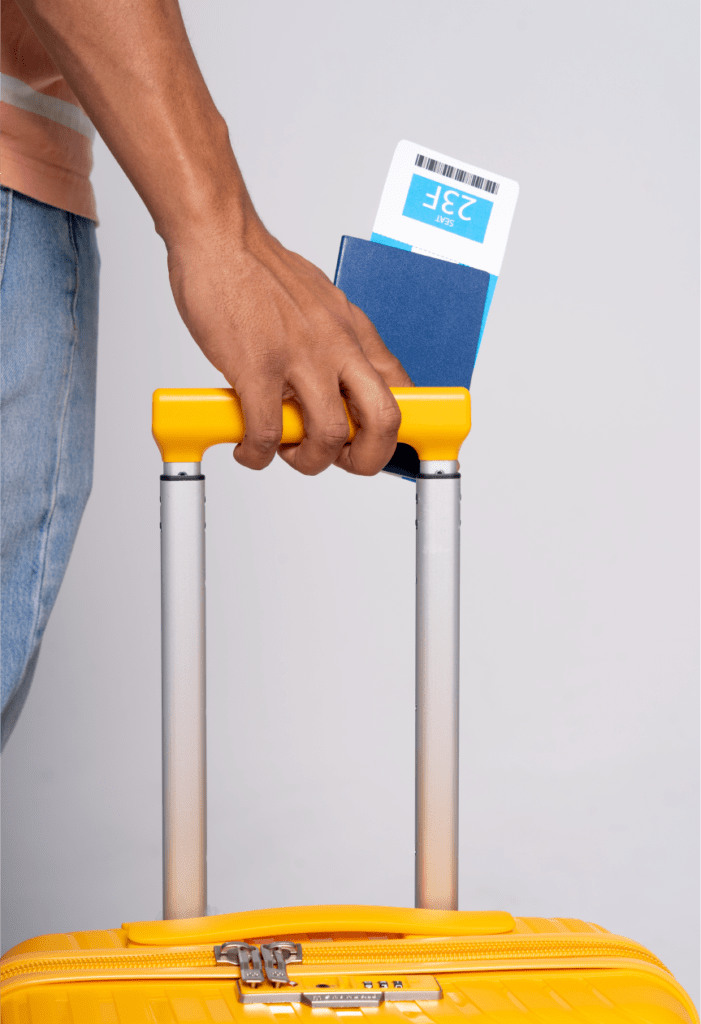
U.S. citizens don’t need a visa for Ecuador, but a passport valid for at least six months beyond the date of departure is required. Travelers can stay up to 90 days without a visa; overstaying can lead to fines or deportation. Authorities may ask for proof of departure, such as a return or onward airline ticket.
Health precautions and vaccinations
No vaccines are required for entry, but if you’re visiting the Amazon region you should get a yellow fever vaccine. It’s also wise to consider vaccinations for typhoid, hepatitis A/B, tetanus, and polio, depending on your itinerary and medical history. Be sure to bring any regular medications you take, and consult your doctor before traveling, especially if you have heart or blood-pressure conditions.
GALAPAGOS TRAVEL GUIDE READY TO GO?
Discover the Galápagos Islands with a guide that combines inspiration and practical advice for a well-planned journey. Learn the best time to visit, how to travel via Quito or Guayaquil, and how to choose between a liveaboard cruise or a land-based stay. You’ll also find essential information on wildlife etiquette, entry requirements, and fees to ensure a smooth arrival. From iconic wildlife to stunning volcanic landscapes, this guide helps you experience the Galápagos in a thoughtful, responsible, and unforgettable way.

Domestic Airlines Operating to Galapagos
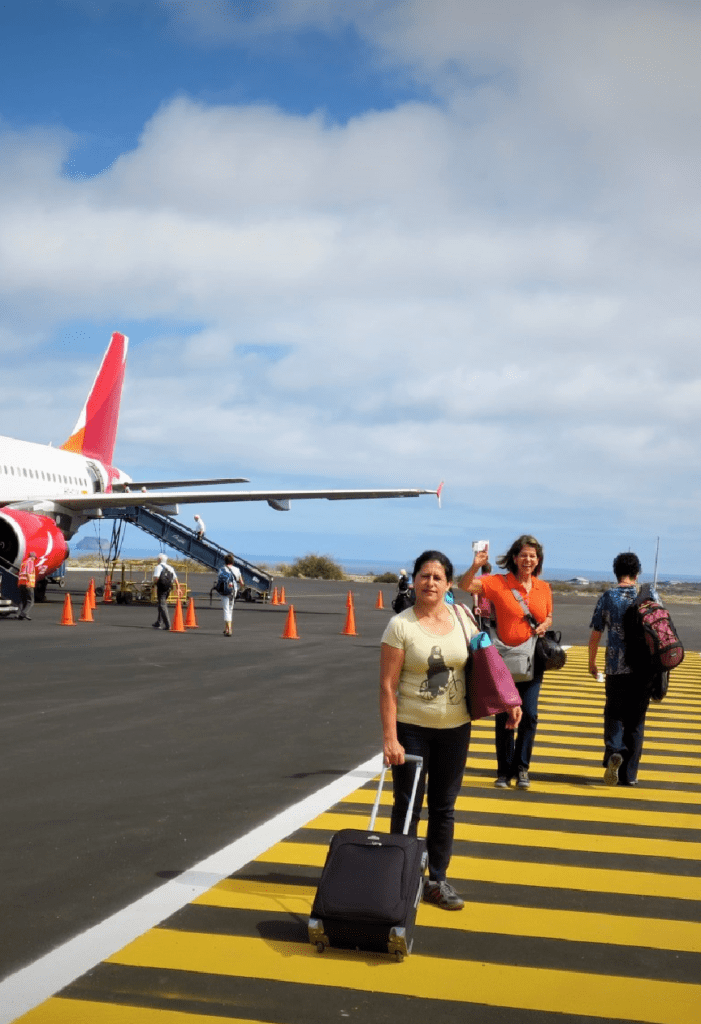
Avianca and Latam fly to the Galápagos islands from the mainland (Quito/Guayaquil), there are two airports in the Galápagos Islands one on Baltra and the other on San Cristobal. LATAM airlines has domestic flights as well as International service. Most airlines have an office or agent in Quito.
Baggage Guidelines
Flights from Quito or Guayaquil to the Galápagos are normally allowed 23 kg (50 lb) per checked bag, with total dimensions (L+W+H) up to 158 cm (62 in). Carry-on limits are usually 10 kg (22 lb), though this varies by airline and fare class—check your ticket rules when booking.
Travel documents
Bring a valid passport, proof of sufficient funds, and a return ticket. U.S. travelers need a passport valid at least six months from entry. It is the travelers’ responsibility to ensure to confirm any required visas for Ecuador and any other countries on your itinerary, including re-entry to your home country.
Sworn Declaration of Goods
All travelers must complete the “Sworn Declaration of Goods” digital form prior to entrance of the National Park and present it at the SICGAL booth in the airport of Baltra or San Cristobal.
Follow this link: https://declaracion.abgalapagos.gob.ec/declaracion
**Formerly this was a paper form, completed during the arrival flight, however the National Park authorities have changed the form to a digital (online) version.**
Local Fees/Taxes
To enter the Galápagos you need two local fees: the Transit Control Card (TCT), now processed online before your flight, and the Galápagos National Park entrance fee, paid in cash (USD) at the airport on arrival (Baltra or San Cristóbal) after showing passport and TCT. The fee supports conservation and site management.
Transit Control Card (TCT) USD 20.00
The Transit Control Card (TCT) is a required document for all visitors entering and leaving the Galápagos Islands. This card is used by authorities to manage sustainable tourism and monitor visitor flow in order to protect the delicate ecosystems of the islands. The Transit Control Card (TCT) is now fully digital, making check-in faster for travelers.

Online Payment
The TCT must be obtained online, this new process will avoid long lines. To obtain the TCT online, passengers must: Access the following link: https://siig-cgreg.gobiernogalapagos.gob.ec/tct/emission?lang=es
- Accept the data protection policy
- Watch the mandatory video on the requirements for entering Galapagos
- Complete their personal information and verify their email address using a security code
- Register the details of their trip and accommodation:
- Accept the responsibility declaration and proceed with online payment using a debit or credit card
- After payment, click on “Reload page” to download the TCT
- A copy of the TCT will also be sent by email. Travelers must carry a digital or printed copy at the Airport and approach the Consejo de Gobierno de Regimen Especial Galapagos counter to active the QR Code showing your passport, round trip airline Galapagos ticket.
SICGAL baggage check
After you get your Transit Control Card (TCT), stop by the SICGAL booth the inspector asks for the Sworn Declaration of Goods and your luggage may be inspected. To ensure you have no problems here, please do not attempt to travel with any food other than small quantities of pre-packaged snack items, such as chocolate bars or similar, and of course, do not bring any plants or plant material in your luggage. Once checked in, you will receive an approval label that you can attach to your luggage and proceed to check-in with your airline.
Galapagos National Park
It is the official access to Galapagos National Park. This fee is paid in cash (USD) at the arrival airport (Baltra or San Cristóbal) after showing your passport. Cards aren’t accepted, so bring cash. If you don’t pay, you can’t leave the airport, come prepared.
The Galapagos National Park entrance fee applies to all visitors. Foreign tourists 13+ pay USD 200 each (under-12s pay USD 100), citizens of CAN/MERCOSUR countries pay USD 100 each (under-12s pay USD 50). Check rates before travel.
Best time to visit Galapagos
The Galapagos Islands are a year-round destination, with stable temperatures due to their equatorial location. However, the experience varies by season. From December to May, conditions are warmer with calmer seas, short daily rains, and lush landscapes—ideal for observing nesting wildlife and enjoying sunny days. From June to November, cooler temperatures and nutrient-rich waters attract abundant marine life, making it a great time for wildlife encounters and diving, though seas can be rougher and skies cloudier. Peak travel periods (mid-June to early September and mid-December to mid-January) require booking in advance.
Ecuador & Galapagos Guide: Key Tips for a Smooth Journey
Planning a trip to Ecuador and the Galápagos can be exciting yet overwhelming. This guide brings together clear, practical tips on entry requirements, transportation, health, costs, and key travel advice helping you enjoy a smooth and unforgettable experience from the start.
Travel Smart in Ecuador: Essential Packing Tips for Every Region
Planning a trip to Ecuador means getting ready for a wide range of climates—from the cool Andes to the humid Amazon, sunny coast, and the Galápagos Islands. This guide answers the most common questions and helps you pack smart so you’re prepared for every destination and experience.
Ecuador Uncovered: A Journey Through Its Four Worlds
Ecuador is a country of incredible diversity, where each region offers a completely unique experience. From the towering Andes to the lush Amazon, the vibrant coast, and the iconic Galápagos Islands, discover the landscapes, cultures, and adventures that make this destination truly unforgettable.
Would you like to start a experience with us?
Please feel free to contact us, our Travel Experts will be happy to send you a free quote according to your needs and budget!